Think back to the last time you rented a movie from a physical store. It has probably been a while. Blockbuster was once the undisputed king of home entertainment, boasting thousands of stores worldwide. But they missed a massive shift in how people wanted to consume media. Netflix came along, embraced the power of the internet, and changed how we watch TV forever. Blockbuster stayed stuck in the past, and we all know how that story ended. That shift is called digital transformation.
It sounds like a complicated tech buzzword, but it is actually a very simple concept. It is not just for tech giants or Silicon Valley startups anymore. Today, every local bakery, clothing brand, and neighborhood accountant needs a clear digital strategy to survive and thrive.
Transform Your Business Today: Don’t let your operations fall behind like Blockbuster. Get My Free Growth Strategy Session Now. Let’s build your high-converting online presence. (Zero commitment. 100% actionable data.)
What is Digital Transformation? (And Why It Isn’t Just About Tech)
At its core, digital transformation means using modern technology to fundamentally change how a business operates and delivers value to its customers.
But here is the biggest secret in the business world: digital transformation is not actually about technology. It is about people, culture, and mindset.
Buying expensive software will not fix a broken business model. True transformation happens when a company changes its culture to constantly challenge the status quo, experiment with new tools, and get comfortable with adapting to change.
Digitization vs. Digitalization vs. Digital Transformation
People often mix these three terms up, but they mean very different things. Let us clear up the confusion with a quick, real-world example:
Digitization: Converting physical information into digital formats.
Example: Scanning a paper receipt and saving it as a PDF on your computer.
Digitalization: Using digital data to make your current work faster and easier.
Example: Uploading that PDF receipt to an accounting app so your finance team can view it online.
Digital Transformation: Reshaping your entire business model based on technology.
Example: Setting up an automated system where customers buy online, inventory updates instantly, and an AI tracker handles your taxes without anyone touching a piece of paper.
Why Outdated Workflows Are Costing Your Business Money
The business world moves fast. If you do not adapt, you risk becoming obsolete. Global spending on digital transformation is reaching trillions of dollars annually.
Here is why companies are investing so heavily in going digital:
1. Modern Customers Expect Instant Gratification
We live in an era of instant gratification. We expect to track food delivery in real-time, click a button to call a ride, and get instant customer support.
If your business requires customers to print a form, sign it, and fax it back, they will quickly leave you for a faster competitor. Upgrading your user experience through targeted SEO and digital marketing solutions ensures your brand shows up exactly where your modern customers are looking.
2. Smarter Decisions Remove the Guesswork
In the past, business owners had to rely on gut feelings to make big decisions. Today, digital tools gather data on everything from what products sell best on Tuesdays to how long users stay on your website. This data gives you a clear roadmap for growth.
3. Automated Tasks Create Happier, More Efficient Employees
Nobody enters the workforce hoping to spend eight hours a day copy-pasting numbers from one spreadsheet to another. Automating boring, repetitive tasks frees up your employees to focus on creative, high-value projects that actually grow the business with custom mobile app development solutions.
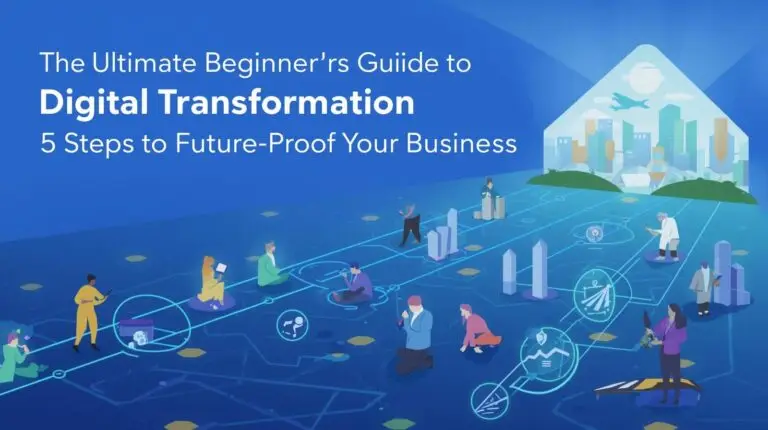
5 Practical Steps to Build a Future Proof Digital Strategy
Building a strategy can feel overwhelming when you see hundreds of tools available. Let us break it down into five manageable steps that any organization can follow.
Step 1: Fix Your Culture and Mindset First
You cannot build a digital business if your team is terrified of change. Leaders must communicate why the change is happening. Show your team how new tools will make their daily work easier, rather than making them feel like their jobs are threatened.
Step 2: Map the Customer Journey to Eliminate Friction
Put yourself in your buyer’s shoes. Walk through the exact steps a customer takes to find, choose, and buy from your business.
Look for friction points. Are there long wait times? Is your website hard to use on a mobile phone? Fix those digital gaps first. If your platform feels outdated, it might be time to review The Ultimate Website Redesign Guide to revamp your site without losing existing customers.
Step 3: Pick Purpose Driven Tools (Not Just the Shiny Ones)
Do not buy a tool just because it is trending on social media. Focus on core technologies that solve your specific business problems:
- Cloud Computing: Storing data online so your team can work securely from anywhere.
- CRM Systems: Customer Relationship Management tools (like Salesforce or HubSpot) that track all client chats and sales leads.
- Automation Software: Tools that send automatic email receipts, follow-up messages, or social media posts.
Step 4: Train and Upskill Your Team
A million-dollar software system is completely useless if your team does not know how to log in or use its features. Allocate time and budget for hands-on training. Empower your employees to master the new tools, which boosts their confidence and productivity.
Step 5: Start Small, Then Scale Up
Do not try to change your entire company overnight. Pick one small, high-impact problem to solve. Once that succeeds and the team sees the benefits, use that momentum to tackle bigger projects like shifting your entire inventory system to the cloud.
Need Expert Help Scaling Digitally?
Book Your Free Digital Growth Consultation and discover the fastest way to modernize your business operations.
How Real Businesses Scaled Using Digital Frameworks
Domino’s Pizza: The Tech Company That Sells Pizza
In 2008, Domino’s stock price hit an all-time low. Customers complained about the food quality, and ordering was a hassle. The leadership team decided to completely reinvent the brand as an “e-commerce company that delivers pizza.”
They created the famous Domino’s Tracker, allowing hungry customers to watch their pizza move from the oven to their doorstep. They made it possible to order via text message, voice assistants, smart TVs, and even smartwatches. Today, the vast majority of their sales come through digital channels.
Your Local Coffee Shop
Transformation does not require millions of dollars. Imagine a local coffee shop that used to rely entirely on cash and paper punch cards for customer loyalty.
By introducing a simple mobile ordering app, customers can now order ahead and skip the morning line. The shop uses an iPad-based checkout system that tracks inventory automatically, letting the owner know exactly when they are running low on ingredients. That is a highly successful digital transformation on a local scale.
Actionable Tips to Kickstart Your Journey Today
If you want to kickstart your digital transformation journey today, use these quick tips:
- Audit your current tools: Make a list of every software your team uses. Eliminate duplicate subscriptions and delete apps that cause confusion.
- Listen to your frontline staff: The employees who answer customer calls or pack boxes know exactly where the operational bottlenecks are. Ask them what needs fixing.
- Prioritize cybersecurity: As you move operations online, protecting customer data is your top priority. Use strong passwords, train employees on phishing scams, and turn on two-factor authentication (2FA).
Frequently Asked Questions (FAQs)
1. Is digital transformation expensive?
It can be, but it does not have to be. Small businesses can start with budget-friendly Software-as-a-Service (SaaS) apps that cost a small monthly subscription. The key is starting small and scaling as you grow.
2. Will digital transformation replace human workers?
It replaces repetitive, manual tasks, not people. By automating data entry, basic scheduling, or simple sorting, your employees can focus on uniquely human-centric skills like customer empathy, creative design, and strategic problem-solving.
3. How long does a digital transformation strategy take to implement?
It is an ongoing journey. Technology changes constantly, so successful companies treat digital transformation as a continuous evolution where they regularly adapt and update their strategies over time.
4. What is the biggest reason these strategies fail?
The number one reason is a lack of cultural adoption. If leadership forces new software on a team without proper explanation, training, or cultural support, employees will simply reject the tool and go back to their old, inefficient ways of working.
Ready to Streamline and Automate Your Business Operations?
Transforming your business shouldn’t feel overwhelming. We combine technical expertise with real-world marketing results to help you capture targeted search traffic and convert casual visitors into loyal clients.
To discover how your business can leverage modern digital channels, explore our breakdown on What Is SEO and Digital Marketing and Why Does Your Business Need Both? to align your marketing and operational goals perfectly.
You can also explore our complete digital transformation services to scale your business with the right technology stack and growth strategy.
Claim Your Specialized Marketing Consultation
Take the guesswork out of scaling. Let’s audit your technical growth setup and build a customized roadmap for your brand.