If you want to sell products online, you need the right e-commerce solution. But with so many platforms available, it can be hard to know what really matters. This blog explains everything in simple words so you can make a smart choice before picking a platform. Whether you are just starting out or already running a business, these features will help you sell more and grow your store anywhere in the world.
What is an e-commerce solution, and how does it work?
An e-commerce solution is a software platform that lets you build and run an online store. It handles everything for you, showing your products, taking payments, managing orders, and keeping your store running smoothly. Think of it as your complete online shop in one place.
Are you losing customers to a slow, confusing online checkout? Don’t let technical limitations hold your business back. Let us build a high-converting, custom digital store tailored to your brand. Claim Your Free UX & SEO Audit to Uncover Hidden Drop-Off Points
Key Features to Look for in an E-commerce Solution
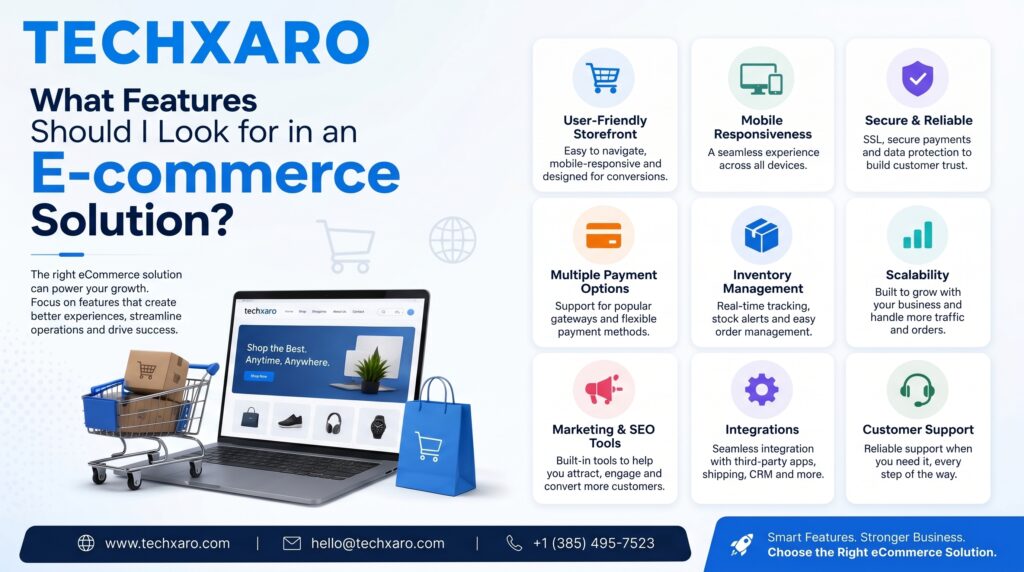
Before you pick any platform, here are the 10 most important features you should always check.
1. Easy-to-Use Store Builder
What it means
You should be able to set up your store without knowing how to code. A good platform gives you simple tools to add products, change your design, and manage your store easily.
Why it matters
Most business owners are not developers. A simple store builder saves you time and money so you can focus on selling.
Look for
Ready-made templates, drag-and-drop tools, and easy product upload options. A professionally built web design and development solution can also make your online store easier to manage and scale.
2. Safe and Flexible Payments
What it means
Your store should accept payments from customers around the world credit cards, PayPal, Apple Pay, and local payment methods.
Why it matters
If a customer cannot pay the way they prefer, they will leave without buying. A good payment system keeps things smooth and secure.
Look for
SSL security, fraud protection, support for multiple currencies, and low transaction fees.
| Payment Type | Used By | Importance |
|---|---|---|
| Credit / Debit Card | Almost everyone | Essential |
| PayPal | Global shoppers | Very important |
| Apple Pay / Google Pay | Mobile users | Important |
| Local payment methods | Region-specific buyers | Depends on market |
| Buy now, pay later | Younger shoppers | Growing fast |
3. Mobile-Friendly Design
What it means
Your store should work well and look good on phones and tablets, not just on a computer screen.
Why it matters
More than 60% of online shopping now happens on mobile. If your store is hard to use on a phone, you lose customers.
Look for
Responsive themes, fast loading on mobile, and a smooth mobile checkout. A high-performing business website helps improve customer engagement and sales.
4. Inventory and Order Management
What it means
The platform should help you keep track of your products and manage customer orders without doing everything manually.
Why it matters
Running out of stock or losing track of orders leads to unhappy customers and lost money.
Look for
Low-stock alerts, automatic order tracking, easy returns handling, and the ability to manage multiple locations if needed.
Turn Browsing Traffic Into Verifiable Retail Revenue. From seamless third-party ERP integrations to conversion-optimized single-page checkouts, TechXaro engineers high-performance web stores designed to maximize average order value (AOV). Explore TechXaro’s Full Suite of E-Commerce Services
5. SEO and Marketing Tools
What it means
Built-in tools that help your store show up on Google and reach more customers through email, social media, and ads.
Why it matters
Getting people to visit your store is just as important as having a nice store. Without visibility, no one finds you.
Look for
Custom URLs, meta descriptions, email marketing, discount codes, and social media integration. Strong SEO and digital marketing services can help increase your store traffic and conversions.
6. Shipping and Delivery Options
What it means
Your platform should connect with shipping providers and let you offer clear delivery choices to customers worldwide.
Why it matters
Expensive or slow shipping is one of the top reasons people leave without buying. Clear shipping options build trust.
Look for
Real-time shipping rates, support for major carriers like FedEx, DHL, and UPS, and the ability to offer free shipping.
7. Security and Data Protection
What it means
Your store and your customers’ personal information must stay protected at all times.
Why it matters
One data breach can destroy customer trust for good. Security is never optional.
Look for
SSL certificate, PCI-DSS compliance, two-factor login, regular backups, and GDPR tools if you sell in Europe. Reliable website maintenance and support services can help keep your store secure and updated.
8. Analytics and Reports
What it means
You should be able to see how your store is doing, what sells well, where visitors come from, and where people stop and leave.
Why it matters
You cannot improve what you cannot measure. Good data helps you make better decisions every day.
Look for
Sales reports, traffic data, conversion rates, and customer behavior tracking.
9. Customer Support Features
What it means
Tools that make it easy for customers to get help when they need it and easy for you to manage those conversations.
Why it matters
Happy customers come back. Fast and friendly support turns a bad experience into a good one.
Look for
Live chat, helpdesk tools, easy returns and refunds, and customer review options.
10. Can It Grow with Your Business?
What it means
The platform should handle more products, more traffic, and more orders as your business gets bigger without slowing down or crashing.
Why it matters
Switching platforms later is painful and expensive. Pick one that can grow with you from the start.
Look for
Flexible pricing plans, no product limits, and reliable uptime of 99.9% or better.
| Feature | Small Store | Growing Business |
|---|---|---|
| Products | Up to 100 | Unlimited |
| Monthly visitors | Under 10,000 | 100,000+ |
| Staff accounts | 1–2 | 5 or more |
| Multi-language support | Not needed | Very important |
| API access | Optional | Essential |
Stop Battling Fragmented Templates. Build a Brand Asset.
Ready to eliminate cart abandonment and scale your monthly sales numbers? Schedule a direct evaluation call with TechXaro’s development strategists today. We will map out your operational requirements and build a scalable digital storefront engineered to convert.
Schedule Your Free E-Commerce Strategy Session with TechXaro
Frequently Asked Questions
How much does an e-commerce platform cost?
Costs vary. Basic plans usually start around $20 to $30 per month. As your business grows, you may pay more for extra features but the right platform pays for itself through more sales.
Can I sell to customers in other countries?
Yes. Most good platforms support multiple currencies, languages, and international shipping. Just make sure your chosen platform has these features before you sign up.
Do I need coding skills to run an online store?
No. Most modern platforms are built for everyday users. You can set up your store, add products, and manage orders without writing any code at all. Learning about website development basics can still help you make smarter decisions for your store.
What is the most important feature to look for?
Security and ease of use are the top two. If customers do not feel safe paying, they will leave. And if the platform is too hard to manage, you will waste a lot of time.
How do I know if a platform can grow with my business?
Check if it offers flexible plans, no product limits, and strong uptime. Reading reviews from businesses similar to yours is also a great way to find out.
Is it hard to switch platforms later?
Yes, switching platforms can be difficult and time-consuming. That is why it is important to choose the right one from the beginning. Think about your future needs, not just where you are today.
Conclusion
Choosing the right ecommerce solution is one of the most important decisions you will make for your online business. The right platform makes it easy to sell, manage orders, accept payments, and grow all in one place.
Focus on the features that matter most: a simple store builder, safe payments, mobile-friendly design, good security, and the ability to grow with your business. Do not get distracted by fancy extras until the basics are solid.
At Techxaro, we help businesses around the world find and set up the right ecommerce solution so you can stop worrying about technology and start focusing on what really matters: growing your business.
Take your time, compare your options, and choose a platform that fits your goals today and tomorrow.
Claim Your Free UX & SEO Audit to Uncover Hidden Drop-Off Points
